
Last updated September 10, 2026
Level 1 sweep and inspection to the NFPA 211 annual standard - flue, crown, cap, and flashing checked and photographed
Chimney sweep logs do not sweep chimneys. They loosen some creosote - which then falls where a brush and vacuum still have to collect it.
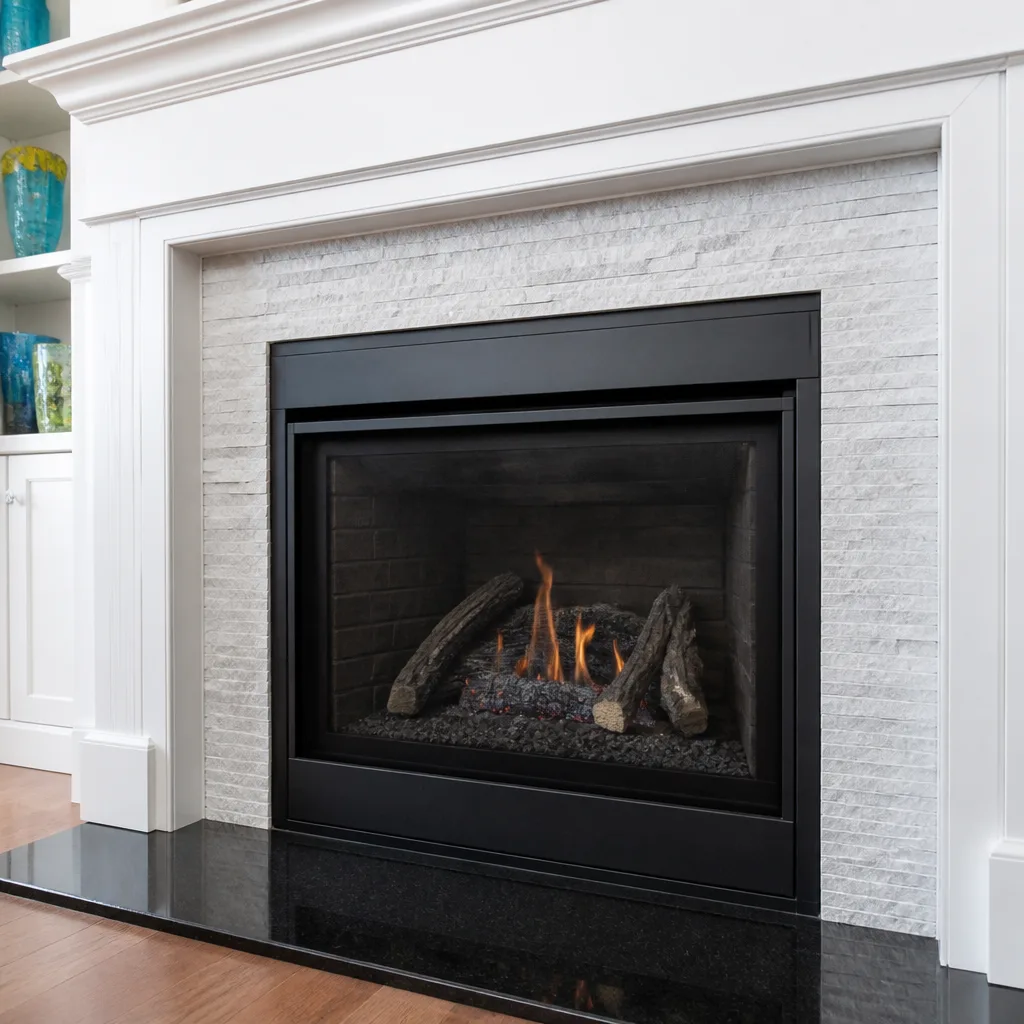
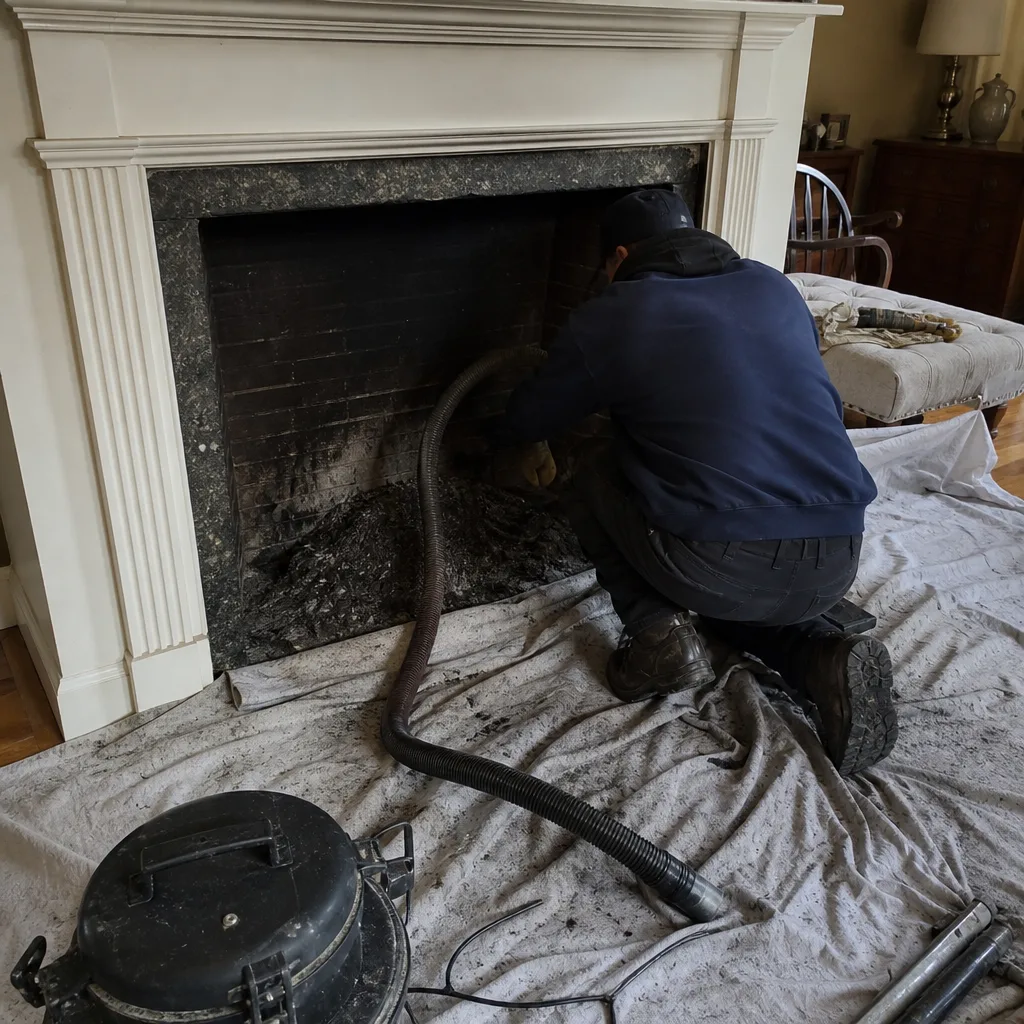 Before
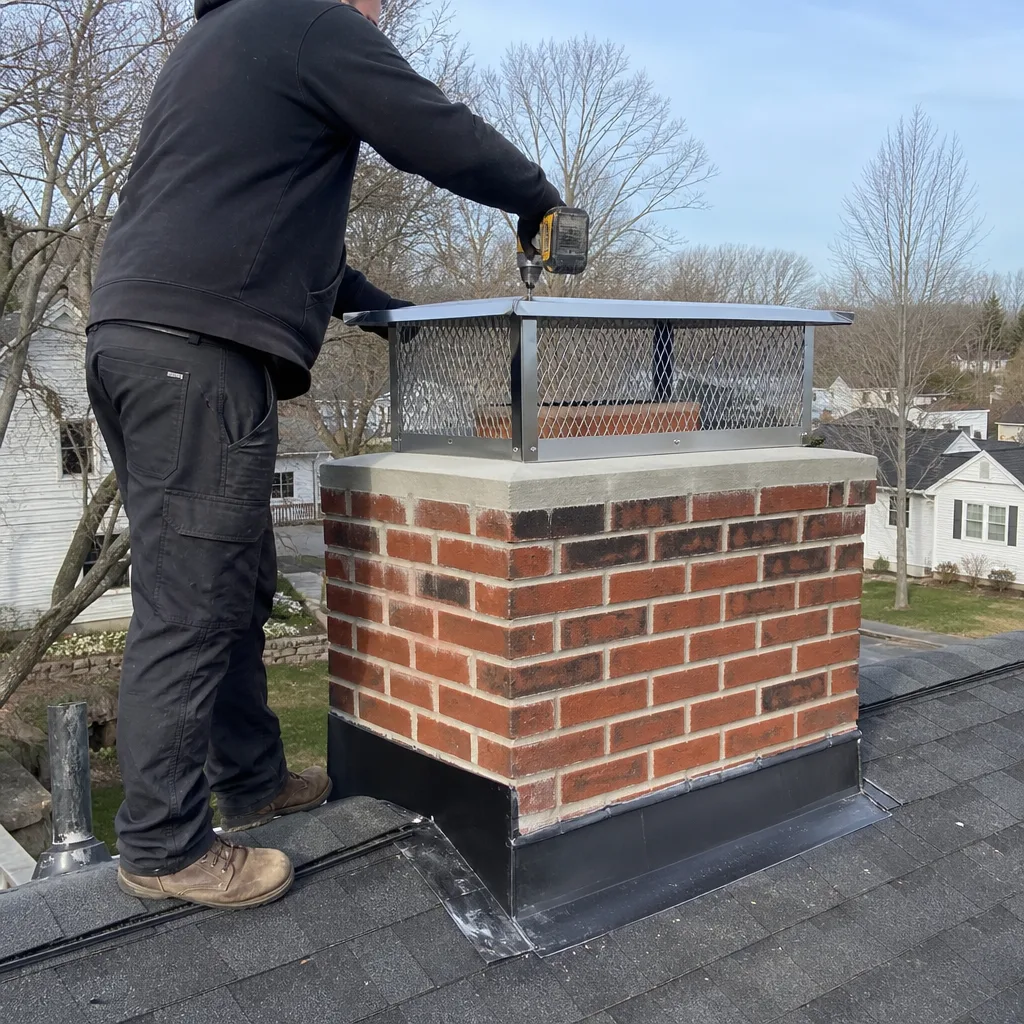 After
After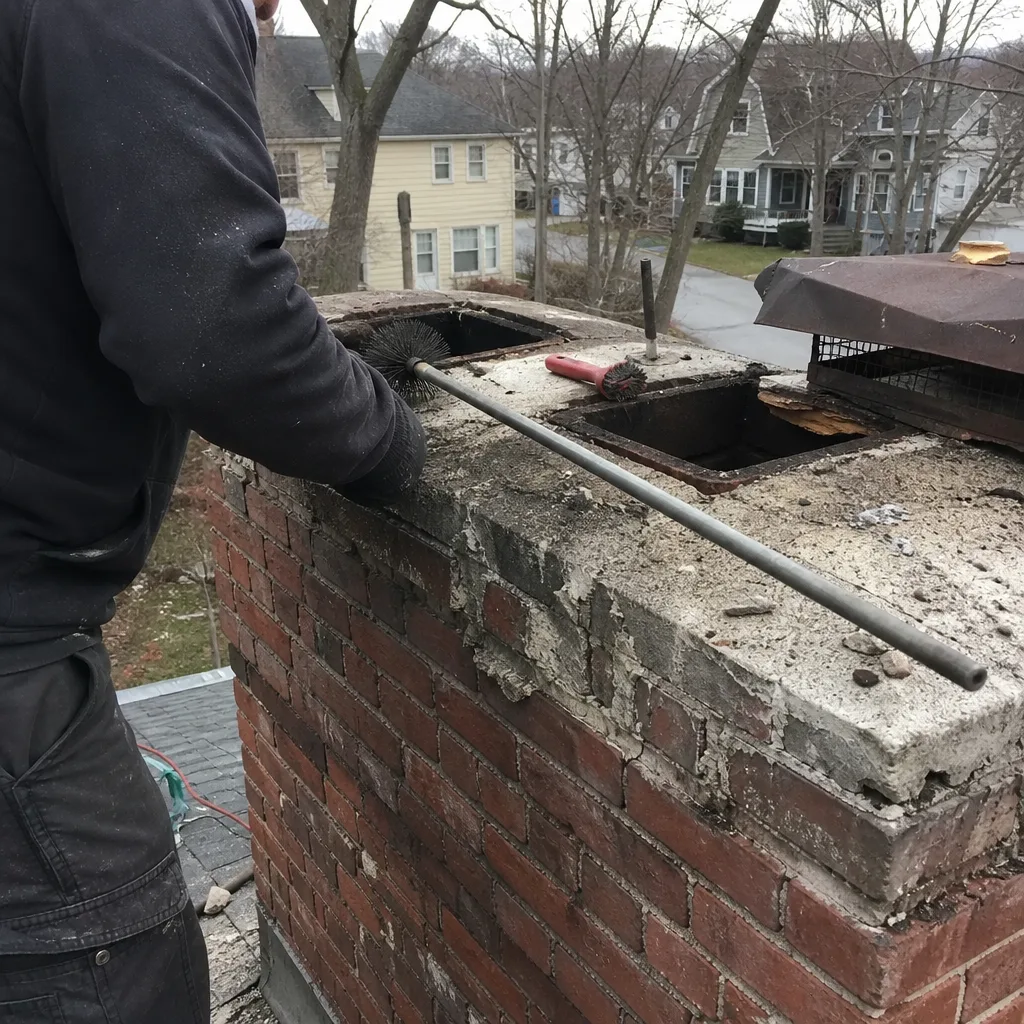 Before
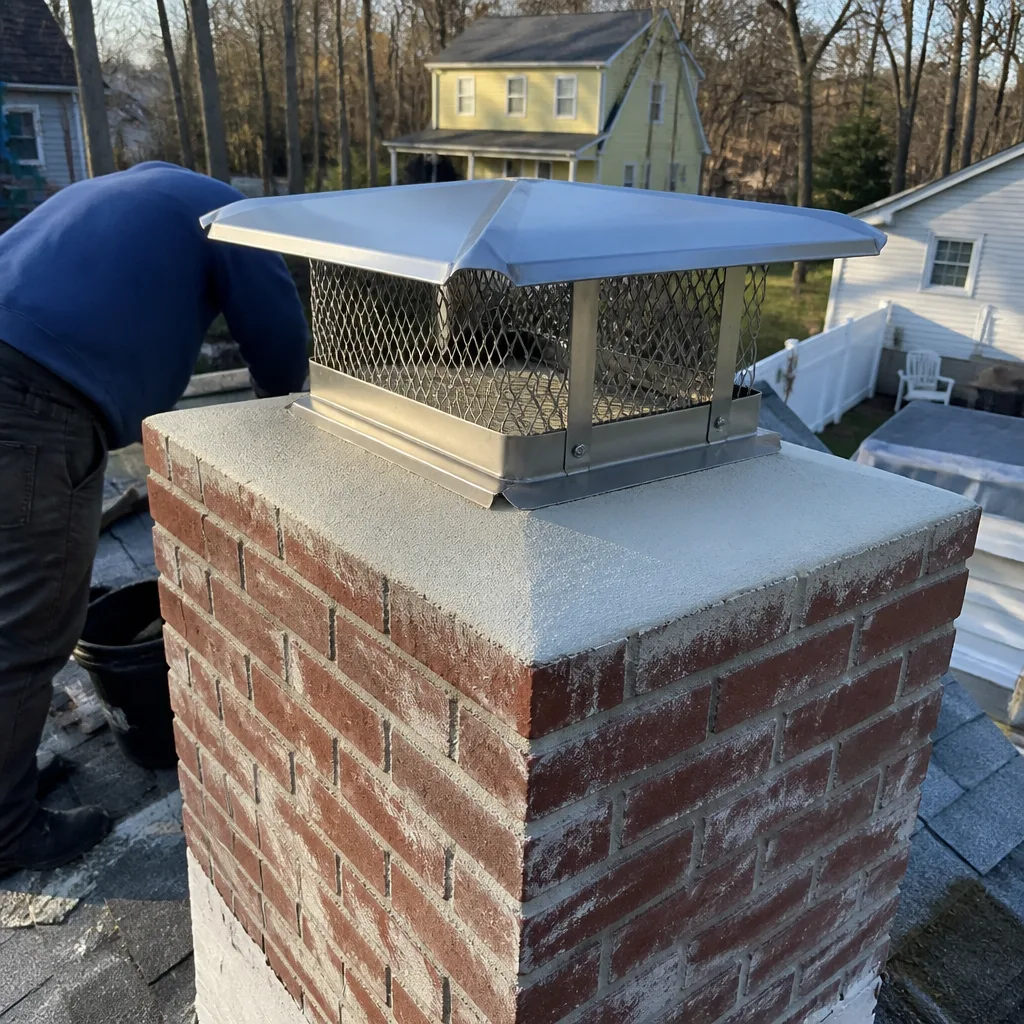 After
After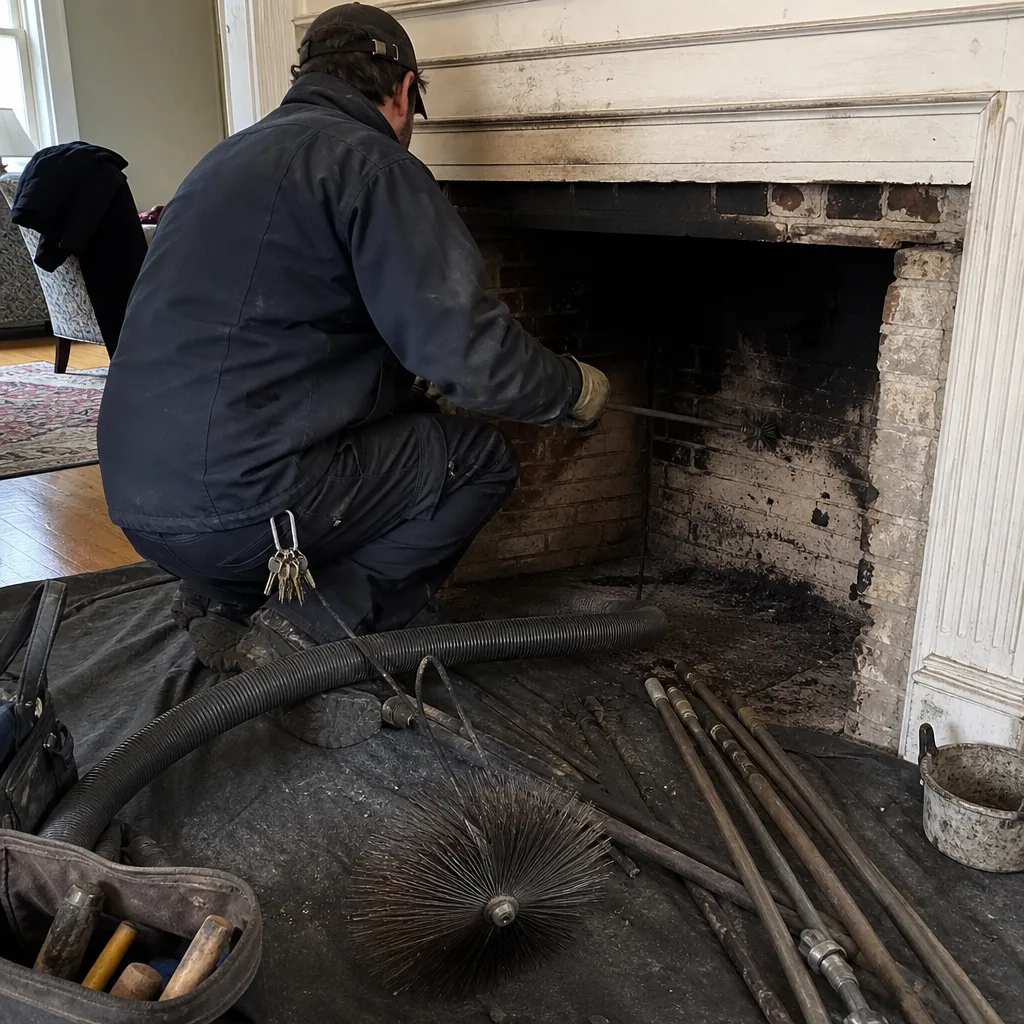 Before
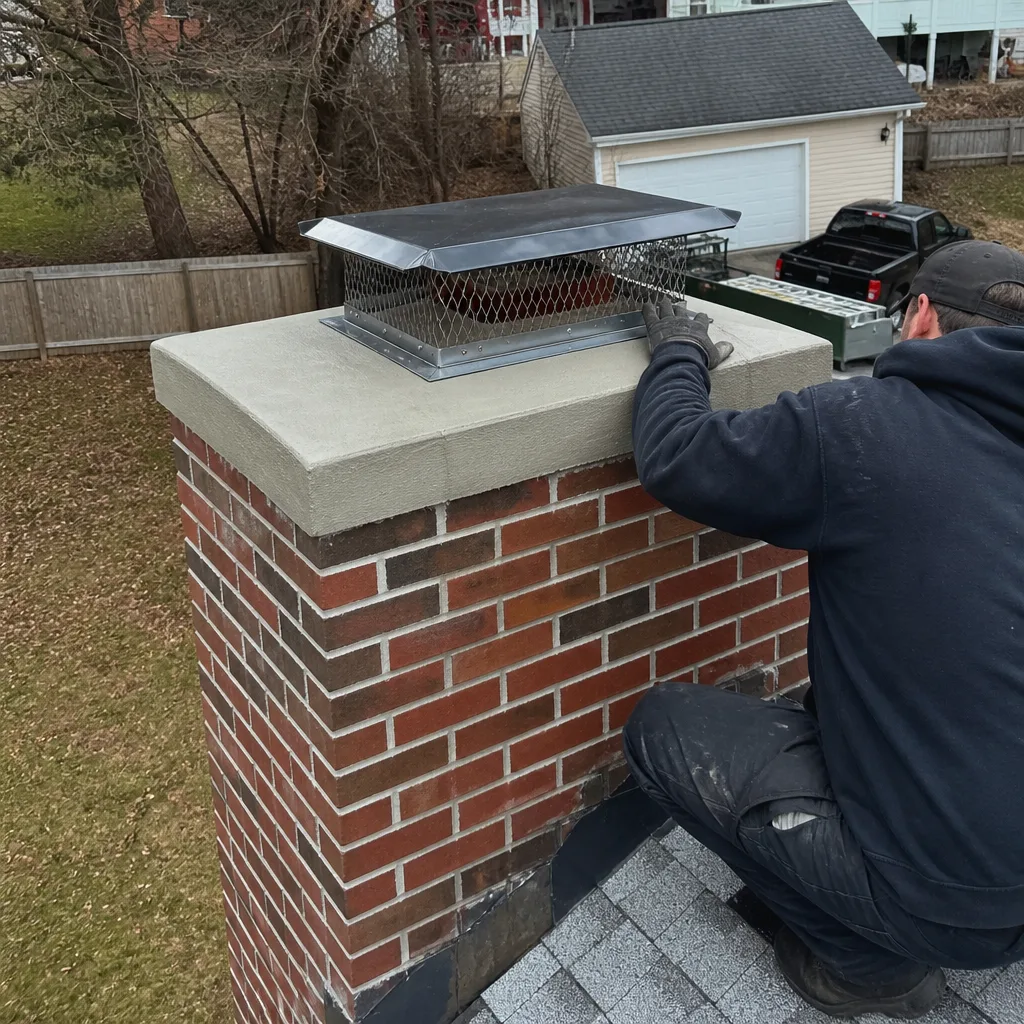 After
AfterChimney Cleaning & Sweep Maintenance Checklist for Boston Homeowners
There are exactly four things a Boston homeowner can safely check from the ground that will tell them 80% of what they need to know about their chimney’s condition before a sweep ever arrives - and most people check zero of them. In our 42 years serving this city, we’ve found that the homeowners who catch problems early aren’t the ones with the fanciest tools. They’re the ones who know what to look for, when to look, and what it means when they see it. This guide is organized around what actually fails on Boston chimneys, when it fails, and how to document it so you never get surprised by a contractor’s claim.
Quick Answer
Boston homeowners should inspect their chimney’s exterior crown, cap, mortar joints, and interior draft performance twice yearly - in late September before heating season and in late March after the final hard freeze. Our Chimney Cleaning & Sweep services include a complete professional sweep with Level-2 camera inspection that should happen annually for wood-burning systems and every two to three years for gas, with all findings documented in photos you can see. The checklist below breaks down exactly what to check, when to check it, and which items require a licensed sweep versus simple homeowner observation.
Table of Contents
- The Four Ground-Level Checks Every Boston Homeowner Should Know
- Interior Indicators You Can Spot Without Tools
- A Boston Month-by-Month Chimney Maintenance Calendar
- Who Does What: Homeowner, Sweep, or Masonry Contractor
- How to Document Your Chimney’s Baseline Condition
- What Chimney Maintenance Costs in the Boston Market
- Common Mistakes to Avoid
- When to Call a Professional
- Frequently Asked Questions
The Four Ground-Level Checks Every Boston Homeowner Should Know
Most chimney problems start at the top and work their way down. The good news is that the critical Chimney Cleaning Warning Signs: A Boston Homeowner’s Reference Guide are visible from your driveway or sidewalk with no ladder required. In Boston’s climate, where freeze-thaw cycles run from November through April and coastal salt air accelerates deterioration, these four checks will catch the majority of issues before water enters your system.
1. Crown Cracking
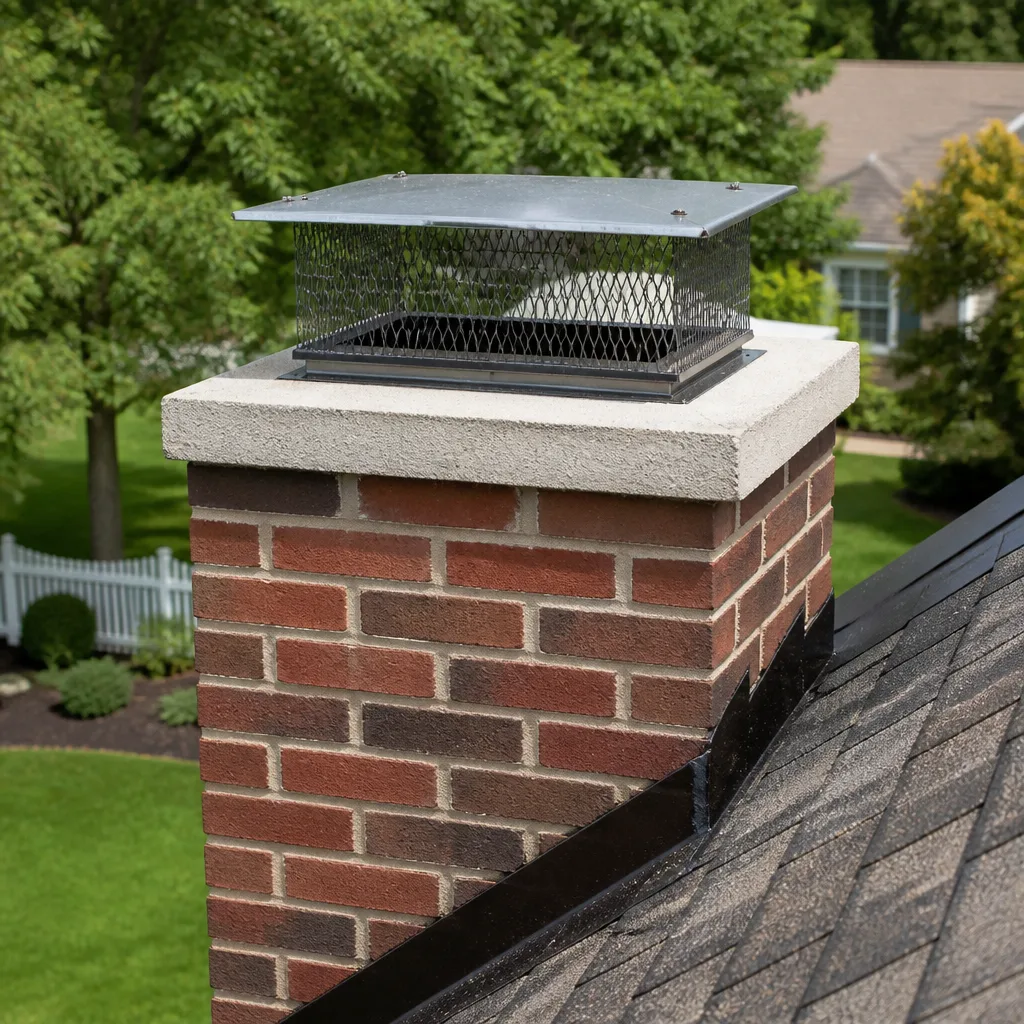
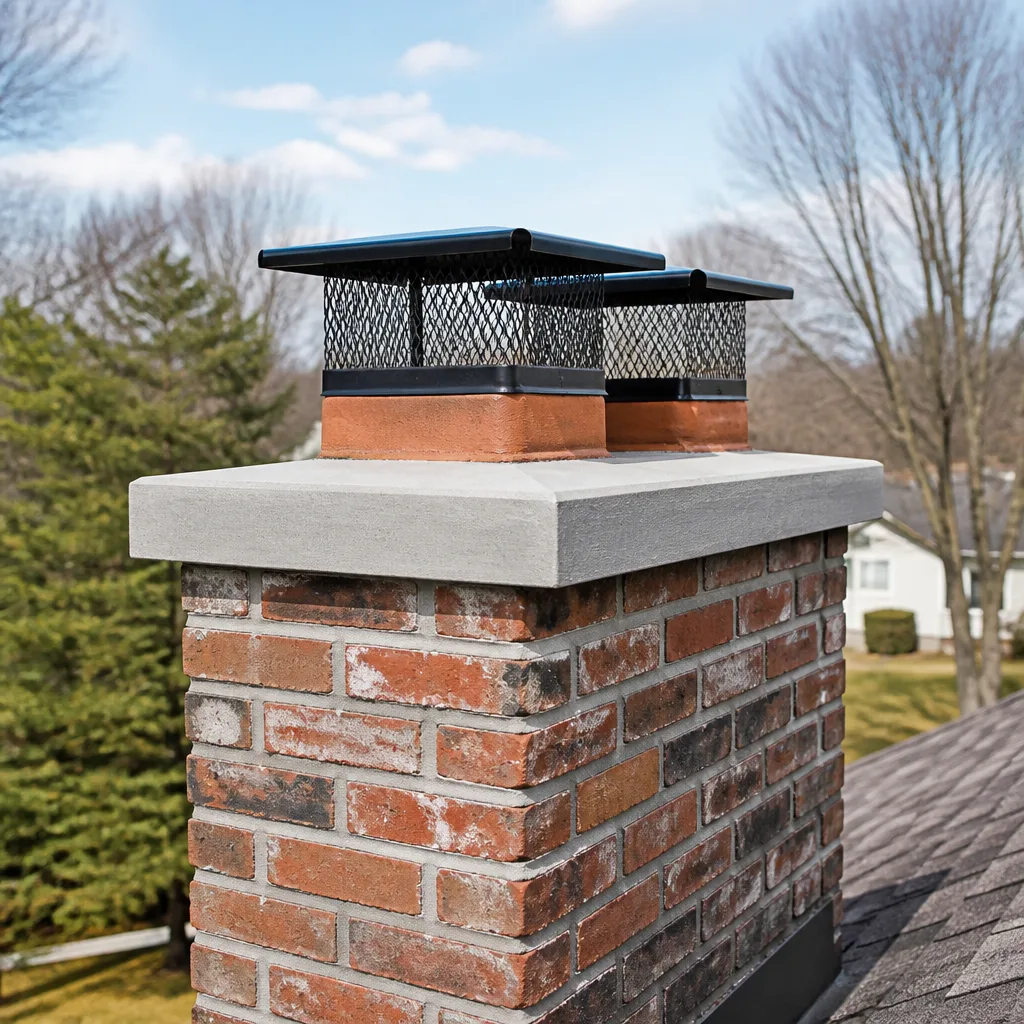
The crown is the concrete slab that tops your chimney, sloped to shed water away from the flue. Stand across the street with binoculars or use your phone’s zoom from your yard. You’re looking for hairline cracks, spalling (flaking concrete), or a crown that has pulled away from the flue tile.
In Boston, crown failure is accelerated by two factors you won’t find in national checklists. First, the rapid temperature swings of our shoulder seasons - a 40-degree day followed by a 15-degree night - create expansion stress that concrete crowns aren’t designed to handle indefinitely. Second, many Back Bay and South End chimneys were built with sand-mix crowns rather than proper Portland cement, a cost-saving shortcut from the 1970s and 80s that we’re still repairing today. A cracked crown lets water straight into the chimney structure. In our experience, a crown with visible cracking in October will show interior water damage by March if left unaddressed.
What you’re documenting: crack width, crack pattern (spiderweb vs. single line), and whether water pools on the crown after rain.
2. Efflorescence Staining
Efflorescence is the white, powdery deposit that appears on brick when water is moving through the masonry and carrying dissolved salts to the surface. It looks like chalk dust or a faint white bloom. On Boston’s red brick chimneys, it’s often visible from the ground even when subtle.
Here’s the key insight most homeowners miss: efflorescence means water is already inside your chimney structure. It’s not a surface problem. In neighborhoods like Jamaica Plain and Roslindale, where many homes sit on clay-heavy soils that hold moisture, we’ve seen efflorescence appear within two years of a crown failure. The salt deposits themselves aren’t structurally damaging, but they’re a reliable indicator that freeze-thaw damage is occurring inside the brick, expanding cracks with every cycle.
What you’re documenting: location on the chimney (which face, how high), whether it washes off with rain or persists, and whether the brick beneath feels soft or sounds hollow when tapped.
3. Mortar Joint Recession
Stand at ground level and look up the chimney’s corner edges. Healthy mortar joints are flush with the brick face or slightly recessed by no more than 1/4 inch. When mortar erodes deeper than that, or when you can see gaps where mortar has fallen out entirely, water has direct access to the interior of your chimney structure.
Boston’s de-icing salts create a unique problem here. When homeowners or municipal plows push salted slush against foundation walls, airborne salt spray can accelerate mortar deterioration on lower chimney courses. We’ve replaced entire lower sections of chimneys in East Boston and Charlestown where salt exposure combined with poor original mortar mix led to joint failure within ten years. Tuckpointing - grinding out failed joints and repacking with fresh mortar - is the fix, but it requires a masonry contractor, not a sweep.
What you’re documenting: depth of recession, whether joints are uniformly eroded or spot-failed, and any loose or missing bricks.
4. Cap Condition
The cap is the metal or concrete cover that sits over the flue opening, not to be confused with the crown. A proper cap has mesh sides to let smoke out while keeping animals and debris in. From the ground, you’re checking for visible rust, missing mesh, a cap that’s tilted or detached, or no cap at all.
Squirrels, raccoons, and starlings are year-round problems in Boston’s dense tree canopy. We’ve removed nests from un-capped flues in every neighborhood from West Roxbury to the North End. A missing cap in September virtually guarantees a problem by December. The mesh also blocks leaves from Boston’s abundant Norway maples, which can smolder and ignite if they fall into a hot flue.
What you’re documenting: cap material (galvanized steel rusts faster than stainless), mesh integrity, and whether the cap appears properly seated or wind-loosened.
Interior Indicators You Can Spot Without Tools
The exterior tells you about water and structural issues. The interior tells you about combustion safety and whether your system is performing as designed. These checks require no specialized equipment - just observation while you’re using your fireplace or heating appliance.
Draft Performance
A properly drafting chimney pulls smoke and combustion gases up and out. Signs of draft problems include:
- Smoke entering the room when you open the fireplace doors
- A persistent cold draft from the fireplace when it’s not in use
- Difficulty starting or maintaining a fire even with dry, seasoned wood
- Smoke stains on the fireplace face or mantel
In Boston’s older housing stock, particularly the triple-deckers of Dorchester and Mattapan, we frequently find that draft problems stem from chimney height relative to neighboring roofs. A chimney that was adequate when the house was built in 1920 may now sit below a 1990s dormer addition, creating a negative pressure zone that pulls air down the flue. This isn’t a cleaning issue; it’s a design issue that requires professional evaluation.
Odor Profile by Season
Your chimney has a normal odor, and it has problem odors. Learn the difference.
A faint, earthy smell in summer when humidity is high is normal - it’s creosote absorbing moisture. A sharp, ammonia-like smell suggests animal presence. A musty, damp smell indicates water intrusion into the structure. A chemical or asphalt odor means creosote buildup is significant enough to be actively off-gassing, which is a fire hazard.
Boston’s summer humidity makes odor identification particularly important. We’ve had homeowners in Hyde Park and Mattapan call in August about “mildew smells” that turned out to be significant creosote deposits activated by humidity. The smell went away in October when heating dried the flue, but the fire hazard remained.
Firebox Staining Patterns
The firebox is the brick or metal box where your fire actually burns. Different stain patterns indicate different problems:
- White or gray powder on rear wall: Normal combustion residue, easily cleaned
- Black, oily stains on side walls: Incomplete combustion, often from burning unseasoned wood or restricted airflow - creosote hazard
- White, flaky buildup on masonry: Spalling brick from moisture intrusion, structural concern
- Rust stains on metal firebox: Water entering from above, crown or flue gaske failure
- Stains concentrated at top of firebox opening: Smoke spillage, draft or fireplace opening size issue
Document these patterns with your phone. If a contractor later claims damage you’ve never seen, you’ll have dated photos showing your firebox condition.
A Boston Month-by-Month Chimney Maintenance Calendar
National chimney checklists fail Boston homeowners because they don’t account for our heating season, our storm patterns, or our freeze-thaw cycle, which is why we created The Complete Guide to Chimney Cleaning in Boston. This calendar is built from four decades of watching what actually happens to chimneys in this climate.
September: Pre-Heating Season Inspection
Schedule your professional sweep and Level-2 inspection now, before the October rush. In our experience, Boston homeowners who book in September get their choice of appointment times; those who wait until the first cold snap often face two-week delays. This is when you perform your four ground-level checks and document baseline photos. If your sweep finds issues, there’s still time to schedule masonry work before the hard freeze.
October: First Fires and Function Check
Start with a small, hot fire using seasoned hardwood. Observe draft performance, check for smoke spillage, and note any unusual odors. This is your real-world verification that the inspection findings match actual operation. If you didn’t get your sweep in September, do it now - don’t wait.
November: Storm Readiness
Boston’s first major storms often arrive before Thanksgiving. Verify your cap is secure, check that gutters aren’t dumping roof runoff against the chimney base, and confirm your crown is shedding water properly. After the first hard freeze, do a quick visual check for new exterior cracks - water that entered in October will expand and reveal itself now.
December through February: Monitor During Peak Use
Check your firebox monthly for new staining. Listen for animal activity in the flue - squirrels and raccoons seek warmth during cold snaps. If you use your fireplace daily, you should be burning only seasoned hardwood and having the chimney checked mid-season if you notice any performance change. In our 42 years, the majority of chimney fires in Boston occur in January, when accumulated creosote meets peak usage.
March: Post-Season Assessment
After your final fire, do your four ground-level checks again. Compare to your September baseline. Winter damage from freeze-thaw will be visible now: expanded cracks, new efflorescence, shifted caps. Document everything. This is also the ideal time for any needed repairs - contractors have more availability, and materials cure properly in moderate temperatures.
April: Masonry Repair Window
Tuckpointing, crown rebuilding, and brick replacement should happen when temperatures stay consistently above 40 degrees. Mortar needs proper curing conditions. We’ve seen rushed April repairs fail when overnight freezes hit fresh mortar. If you need masonry work, get three quotes and verify that contractors plan for Boston’s unpredictable spring weather.
May through August: Off-Season Maintenance
Address any deferred repairs. Consider a chimney cap upgrade if yours is galvanized steel - stainless or copper caps from Olympia Chimney or Gelco will outlast multiple galvanized units. This is also when to plan major projects like liner replacement, which requires the chimney to be out of service for one to two days. Schedule now for September installation.
Who Does What: Homeowner, Sweep, or Masonry Contractor
One of the most expensive mistakes we see is homeowners hiring the wrong professional for the wrong problem. Here’s how to sort it out.
| Task | Who Should Do It | Why |
|---|---|---|
| Annual sweep and inspection | Licensed chimney sweep | Requires NFPA 211 knowledge, proper brushes, and camera equipment for Level-2 inspection |
| Creosote removal | Licensed chimney sweep | Professional-grade vacuums, rotary cleaning systems, and safety protocols for hazardous material |
| Level-2 camera inspection | Licensed chimney sweep | Requires specialized camera, training in defect identification, and documentation standards |
| Crown repair or rebuild | Masonry contractor or specialized sweep | Requires concrete work; some sweeps have masonry capability, many don’t |
| Tuckpointing (mortar joint repair) | Masonry contractor | Specialized grinding, matching, and repacking skills; not within sweep scope |
| Flue liner repair or replacement | Licensed chimney sweep | Requires product-specific training; we use DuraFlex and HeatShield systems with manufacturer certification |
| Cap installation | Homeowner (simple) or sweep (complex) | Standard caps are bolt-on; custom fit or multi-flue caps require professional measurement |
| Damper repair | Licensed chimney sweep | Requires access to throat or top-sealing damper mechanisms |
| Smoke chamber parging | Licensed chimney sweep | Requires spray-applied refractory materials and cure-time knowledge |
The key distinction: sweeps clean, inspect, and repair the interior flue system and components. Masonry contractors repair the exterior structure. Some companies, including Hearthstone Chimney Co., employ technicians cross-trained in both disciplines, but this is not universal. Always ask specifically who will perform which work.
Homeowners can safely perform the ground-level checks, interior observations, and documentation described in this guide. What homeowners should not attempt: any work requiring ladder access to the roof, any disassembly of flue components, or any cleaning beyond superficial ash removal. The combustion system is not a place for experimentation.
How to Document Your Chimney’s Baseline Condition
This is the checklist item almost no one does, and it’s the one that saves the most money and frustration.
Contractor disputes over damage claims are common in Boston’s competitive home services market. A contractor points to a crack and says it’s new and urgent. You have no way to know if it existed last year. Without documentation, you’re choosing between trusting a stranger and delaying potentially necessary work.
Here’s the system we recommend to every homeowner:
- Take dated photos from four fixed positions. Stand at the same spot in your yard, driveway, or sidewalk each time. Mark the spot with a paver or landscape feature so you can find it again. Shoot the chimney from the southeast, southwest, and straight-on angles, plus one zoomed detail of the crown.
- Photograph the firebox before the first fire each season. Use your phone’s flash. Capture the full box, then detail shots of any stains or cracks.
- Keep a simple log. Note date, weather, what you observed, and any changes from prior checks. “October 3, 2024: Crown crack visible on south side, approximately 6 inches, no change from March photo.”
- Store everything in a dedicated folder. Cloud storage with date stamps is ideal. Email yourself the key photos so they’re archived independently of your phone.
- Request photos from your sweep. Any professional doing a Level-2 inspection should provide interior flue photos as part of their documentation. If they don’t, ask why. At Hearthstone Chimney Co., we provide photos with every inspection - it’s part of our standard.
When you have two or three years of documentation, patterns become obvious. A crack that hasn’t changed in thirty months is different from one that grew two inches last winter. That distinction is worth hundreds or thousands of dollars in avoided unnecessary repairs.
What Chimney Maintenance Costs in the Boston Market
Chimney service pricing varies by region, by chimney type, and by the specific condition found. The ranges below reflect what we’ve observed in the Boston market for typical single-family homes with masonry chimneys. Prices are for professional work by licensed, insured providers - not the lowest bidder on a discount platform.
| Service | Typical Boston Price Range | What Affects Cost |
|---|---|---|
| Level-1 sweep and inspection | $175 - $275 | Number of flues, ease of access, amount of creosote |
| Level-2 inspection with camera | $275 - $450 | Height of chimney, number of flues, need for roof access |
| Creosote removal (heavy buildup) | $300 - $600 | Degree of glazing, need for chemical treatment or rotary cleaning |
| Crown repair (sealant/coatings) | $400 - $800 | Extent of cracking, product used, chimney size |
| Crown rebuild | $1,200 - $2,500 | Chimney dimensions, accessibility, need for forming |
| Stainless steel cap installation | $250 - $550 | Flue size and count, cap style, material grade |
| Tuckpointing (per square foot) | $15 - $30 | Height on chimney, mortar matching requirements, scaffolding needs |
| Flue liner replacement (stainless) | $2,500 - $5,500 | Flue length and diameter, number of bends, appliance connections |
| Smoke chamber parging | $1,500 - $3,000 | Chamber size, access difficulty, material choice |
These ranges are current for the Boston market as of 2024-2025. Inflation in materials and labor has pushed prices up roughly 15% since 2020, with the steepest increases in stainless steel products and masonry labor.
At Hearthstone Chimney Co., we provide no-hassle upfront pricing - the number on the estimate is the number on the invoice. For more guides & resources, visit our blog. Our $89 Seasonal Tune-Up covers a Level-1 sweep and basic inspection for standard fireplaces. For systems with heavy use or suspected issues, we recommend the full Level-2 inspection with camera documentation.
We also offer a Free Second Opinion on any written estimate from another provider. Bring us their proposal and your photos, and we’ll tell you straight whether the scope and pricing align with what we see in your chimney.
Common Mistakes to Avoid
- Hiring based on the lowest price alone. In Boston’s market, a sweep quote below $150 often means rushed work, no camera inspection, or uninsured operators. The cost of a missed defect far exceeds the savings.
- Ignoring summer chimney odors. That “musty” smell in July doesn’t go away; it means creosote is absorbing moisture and becoming more acidic, which accelerates flue tile deterioration. Address it before heating season.
- Assuming gas fireplaces need no maintenance. Gas systems don’t produce creosote, but they do produce corrosive condensation and can develop debris blockages. Annual inspection is still recommended, though sweeping intervals can stretch to two to three years.
- Letting gutters dump water at the chimney base. This is one of the most preventable causes of chimney failure we see in Boston. A $200 gutter repair protects a $15,000 chimney structure.
- Accepting verbal damage claims without photo evidence. Any sweep who identifies “urgent” damage should be able to show you the photo and explain what you’re seeing. If they can’t or won’t, get a second opinion.
- Scheduling masonry work in winter. Mortar needs temperatures above 40 degrees and protection from freezing for 48 hours after application. We’ve been called to redo failed winter tuckpointing that should have waited for spring.
- Using the chimney as a vent for other appliances without proper sizing. In older Boston homes, it’s common to find water heaters or furnaces sharing a flue with a fireplace. This requires specific liner sizing and is a frequent source of carbon monoxide risk. Never assume a shared flue is safe without professional evaluation.
When to Call a Professional
Call a licensed sweep immediately if you observe smoke entering your living space, a strong chemical odor during fireplace use, visible flames or glowing in parts of the chimney where they don’t belong, or animal sounds from the flue. These are active safety concerns, not maintenance deferrals.
Schedule an inspection within two weeks for new exterior cracks, efflorescence that appears suddenly, a cap that’s missing or visibly damaged, or any change in draft performance from prior seasons. These are the conditions that worsen rapidly through a Boston winter.
For masonry concerns - mortar joint recession, spalling brick, or crown deterioration - contact a qualified masonry contractor or a sweep company with in-house masonry capability. Get multiple opinions for work exceeding $1,000, and always request photo documentation of the claimed damage.
Hearthstone Chimney Co. offers free estimates in Boston and surrounding communities. A live person answers our phones 24 hours a day, 7 days a week - no voicemail, no callback queue. Call (857) 597-5950 to schedule your inspection or to request a Free Second Opinion on any written estimate you’ve received. We’ve been serving Boston homeowners since 1984, and we plan to be here when you need us next.
Frequently Asked Questions
A standard Level-1 chimney sweep and inspection in Boston typically costs between $175 and $275, while a Level-2 inspection with camera documentation runs $275 to $450 depending on chimney height and flue configuration. Heavy creosote removal or additional services will increase the cost. Call (857) 597-5950 for an exact quote - estimates are free, and our $89 Seasonal Tune-Up covers basic sweep and inspection for standard fireplaces.
Wood-burning systems in Boston should be swept and inspected annually, ideally in September before heating season begins. Gas systems can typically go two to three years between inspections, though annual checks are still wise for heavily used fireplaces. Homes burning more than three cords of wood per season, or those with older masonry chimneys in neighborhoods like Dorchester or Roxbury with significant freeze-thaw exposure, may need mid-season checks.
You need a new liner if your existing liner is cracked, improperly sized for your appliance, or missing entirely - and only a Level-2 camera inspection can confirm this with certainty. In Boston, we’ve found that roughly 30% of liner replacement recommendations made without camera evidence are unnecessary or addressable with repair rather than full replacement. At Hearthstone Chimney Co., we show you the photos and explain what we’re seeing before recommending any liner work. If another company says you need a liner, our Free Second Opinion will verify whether the evidence supports the claim.
Skipped maintenance leads to creosote accumulation, which increases chimney fire risk; water intrusion, which causes structural deterioration costing thousands to repair; and potential carbon monoxide exposure from blocked or damaged flues. In Boston’s climate, the freeze-thaw cycle accelerates all water-related damage, meaning a small crack left through one winter often becomes a major repair by the next. The cost of annual maintenance is a fraction of the cost of rebuilding a chimney or remediating fire damage.
Homeowners can remove superficial ash and debris from the firebox, but complete flue cleaning requires professional equipment and training to be done safely and effectively. More importantly, without a camera inspection, you cannot see the condition of the flue interior where most dangerous defects occur. For the cost of renting equipment and the risk of incomplete cleaning, professional service is the sound choice. We do not recommend DIY flue cleaning for any homeowner.
A Level-2 inspection is a detailed examination of the accessible portions of the chimney interior and exterior, including video scanning of the flue, evaluation of all clearances and connections, and documentation of findings with photos. You need one when buying or selling a home, after a chimney fire or severe weather event, when changing fuel types or appliances, or when a Level-1 inspection suggests hidden problems. In Boston’s older housing market, we recommend a Level-2 inspection as the baseline for any home where the chimney’s history is unknown, which is most properties built before 1990.
Boston follows the Massachusetts State Building Code, which incorporates NFPA 211 standards for chimney construction and maintenance. Key requirements include proper clearances to combustibles, minimum chimney heights relative to roof penetrations, and specific liner sizing for solid fuel appliances. For historic homes in designated districts like Beacon Hill or Back Bay, additional review may be required for exterior masonry alterations. A licensed sweep should be familiar with these requirements and able to advise whether your system meets current code. We document code compliance as part of every inspection at Hearthstone Chimney Co.
The Bottom Line
Chimney maintenance in Boston is not complicated, but it is specific. The four ground-level checks - crown, efflorescence, mortar joints, and cap - will tell you most of what you need to know before calling a professional. Interior observations of draft, odor, and firebox staining complete the picture. Document everything with dated photos, follow the month-by-month calendar built for our climate, and know which problems require a sweep versus a masonry contractor. The homeowners who avoid surprises are the ones who check regularly, who demand photo evidence for any recommended repair, and who build relationships with providers they can call back year after year. That’s the approach we’ve built Hearthstone Chimney Co. on for 42 years, and it’s the one we recommend for every Boston homeowner who plans to stay in their home.
Written by Russell Haines, Owner at Hearthstone Chimney Co., serving Boston since 2014.