
Level 1 sweep and inspection to the NFPA 211 annual standard - flue, crown, cap, and flashing checked and photographed
Chimney sweep logs do not sweep chimneys. They loosen some creosote - which then falls where a brush and vacuum still have to collect it.
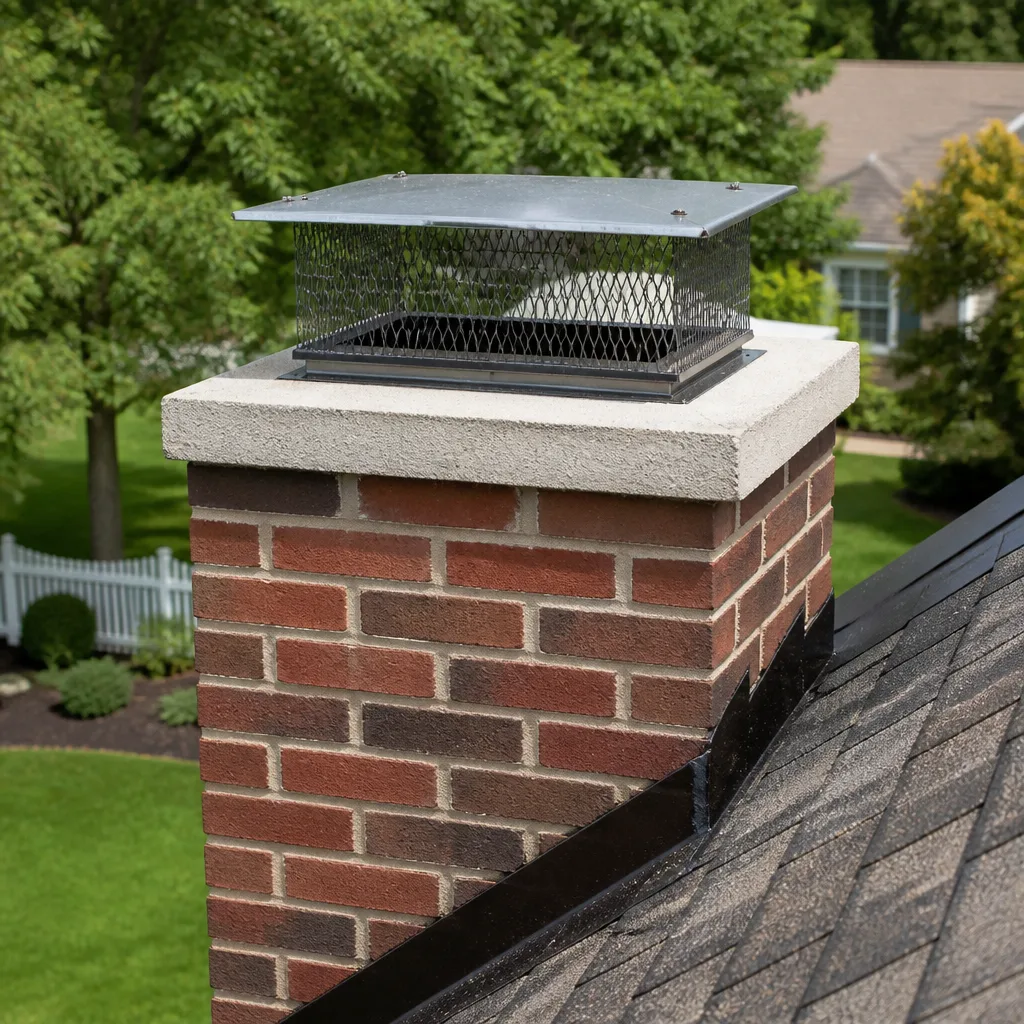
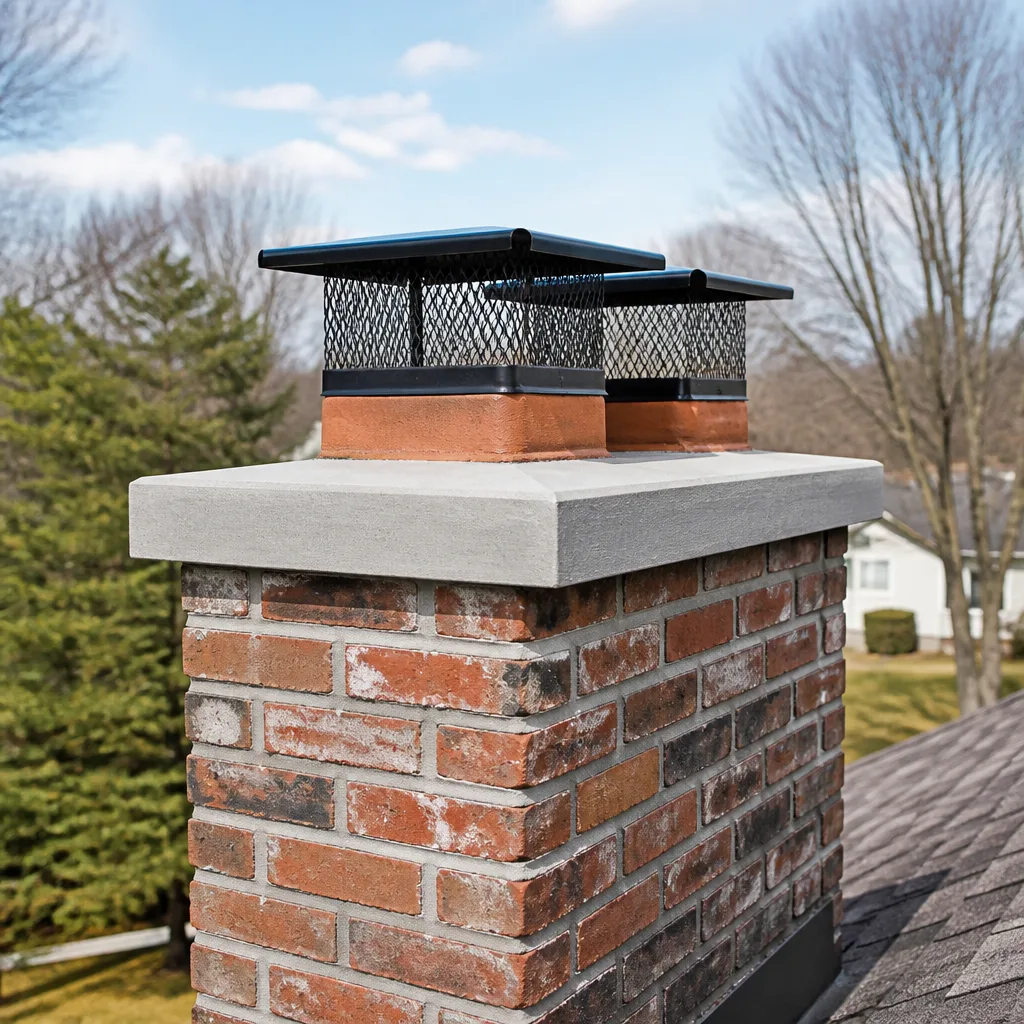
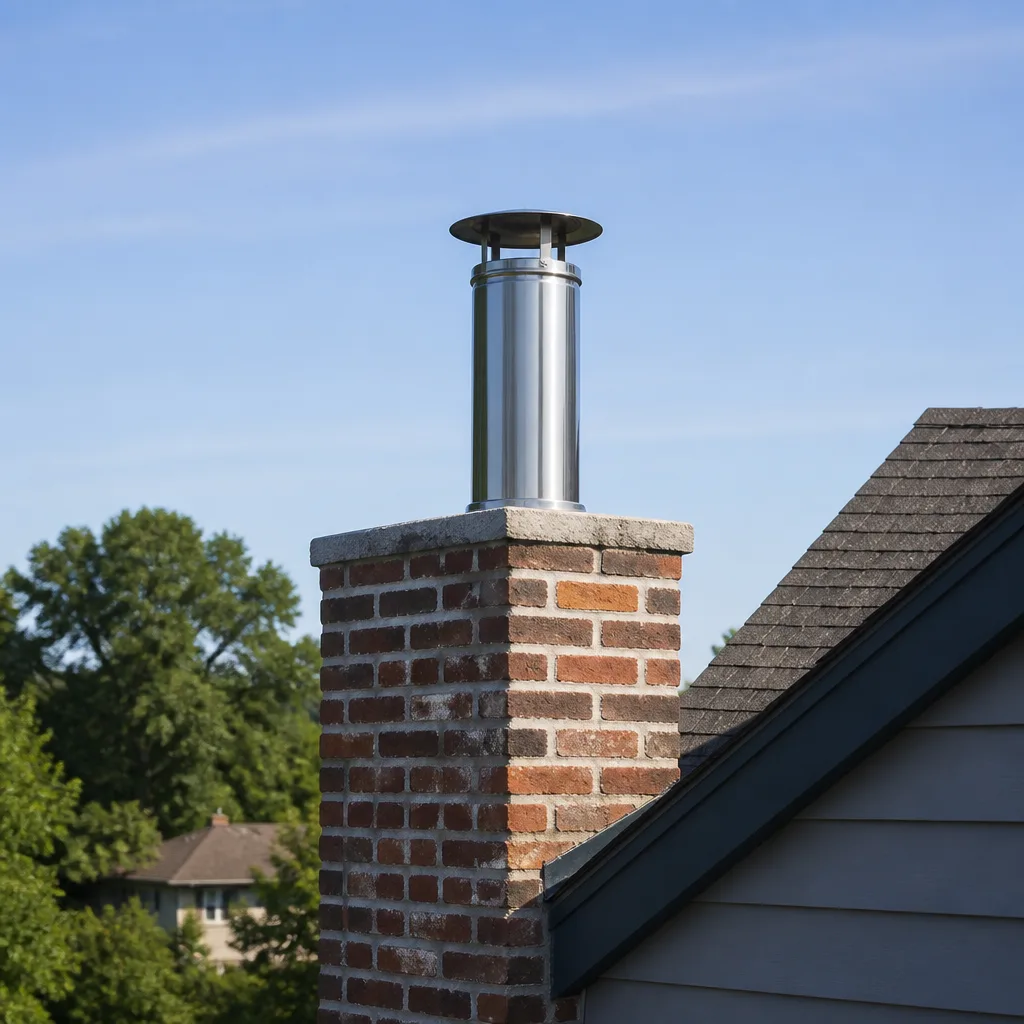
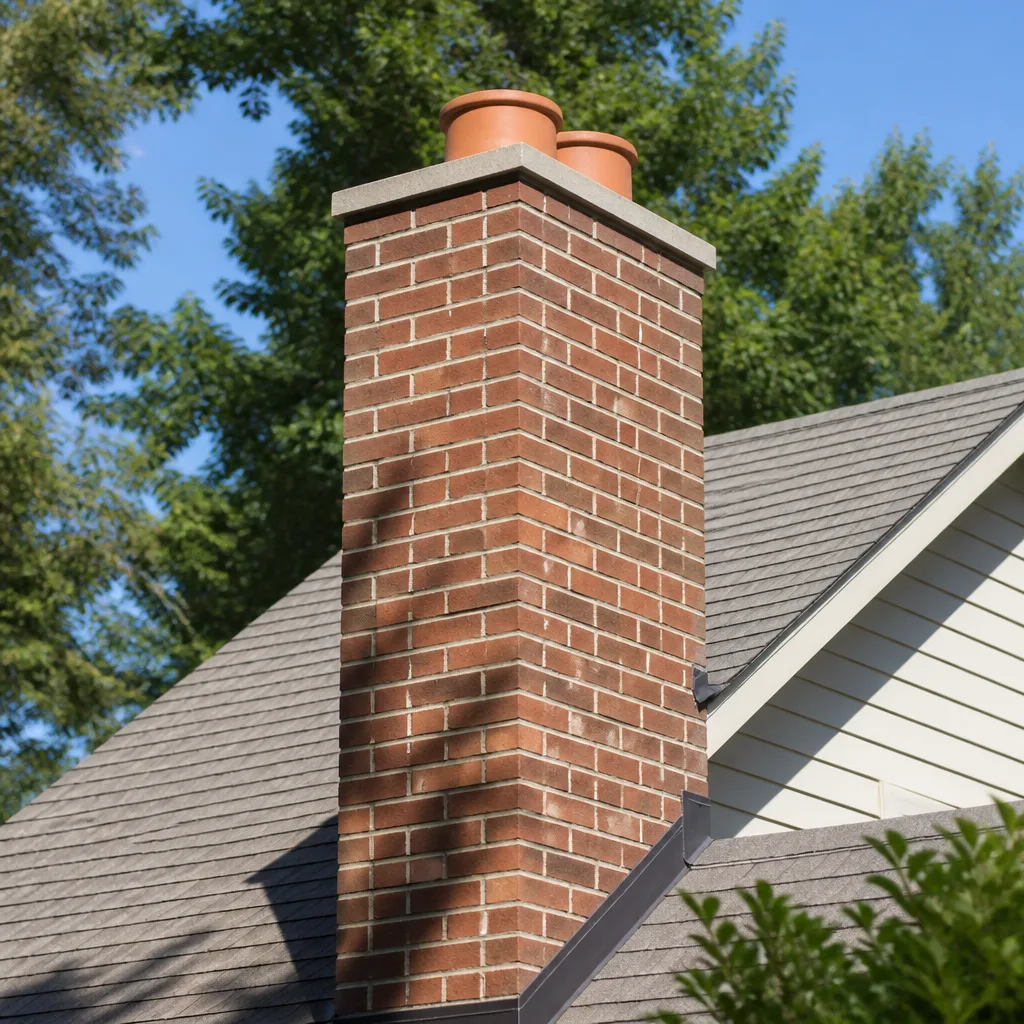
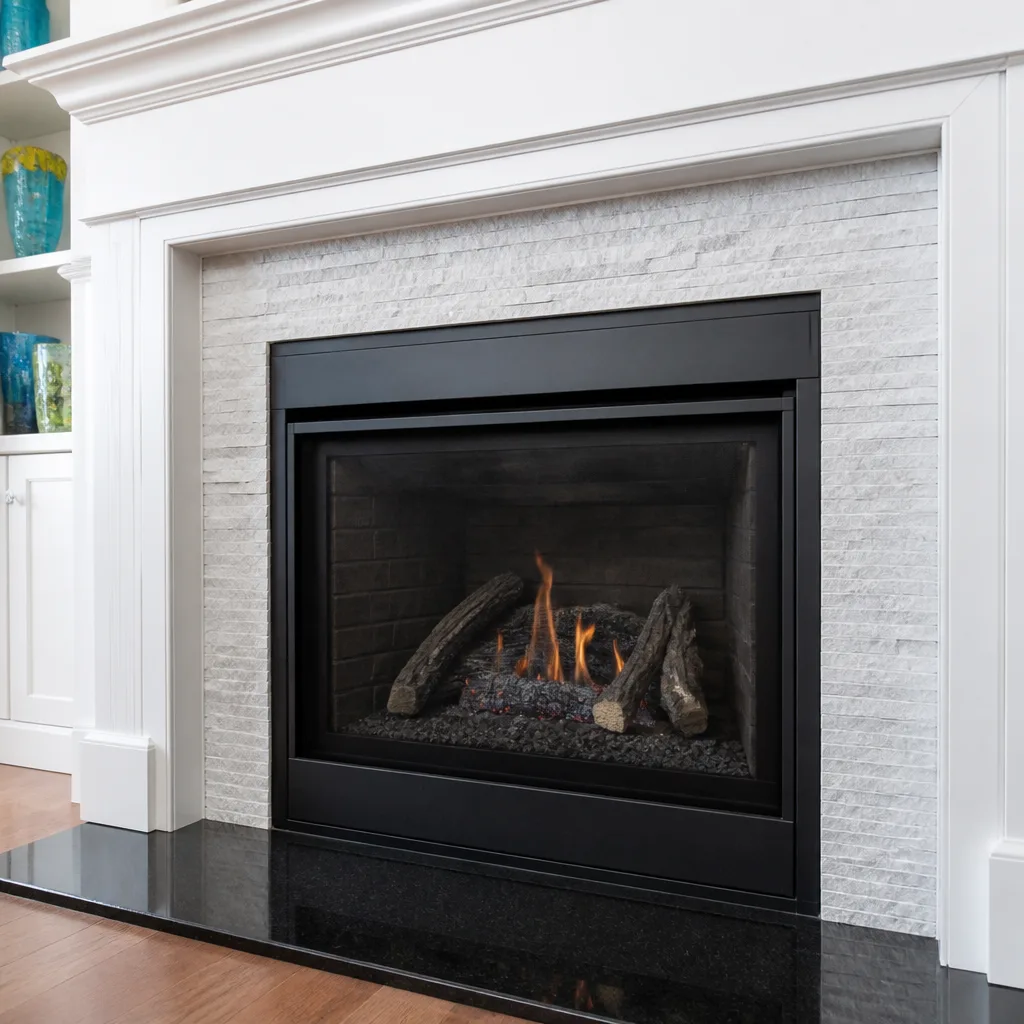
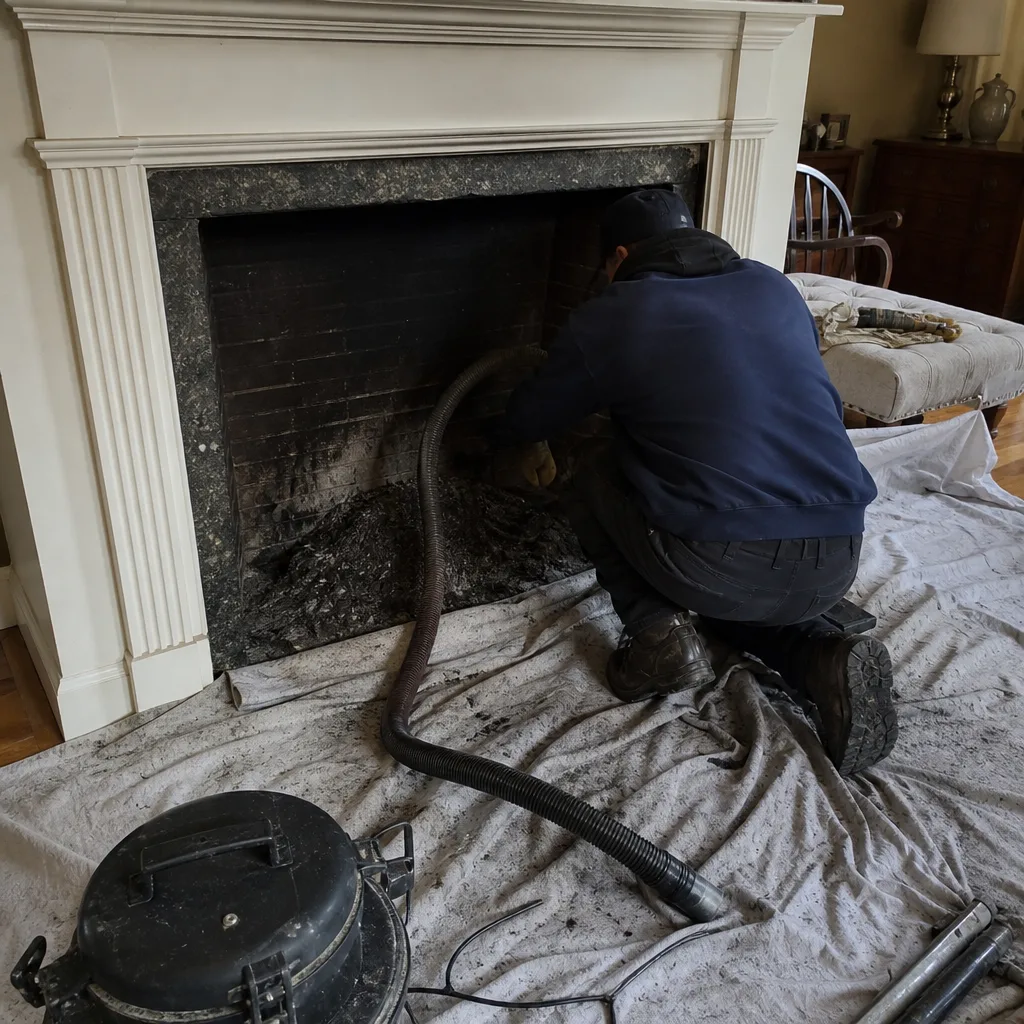 Before
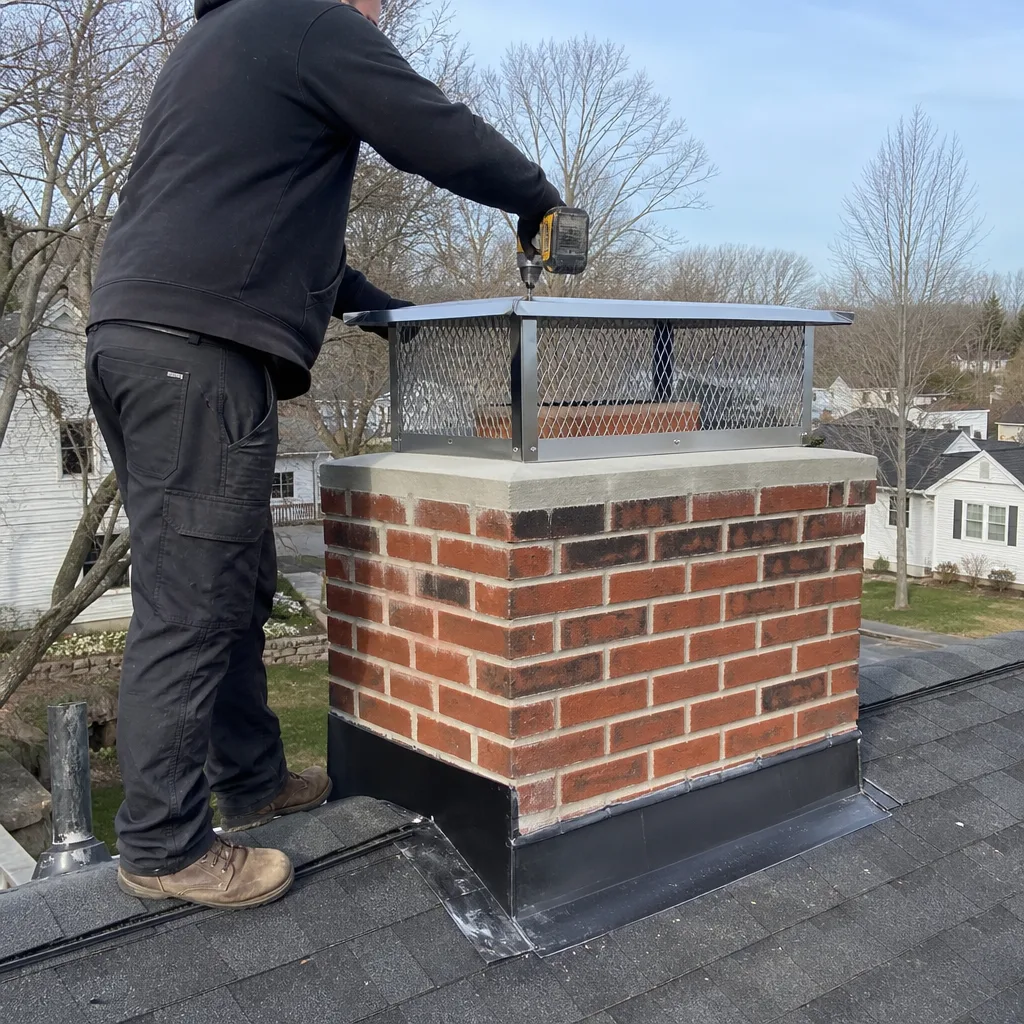 After
After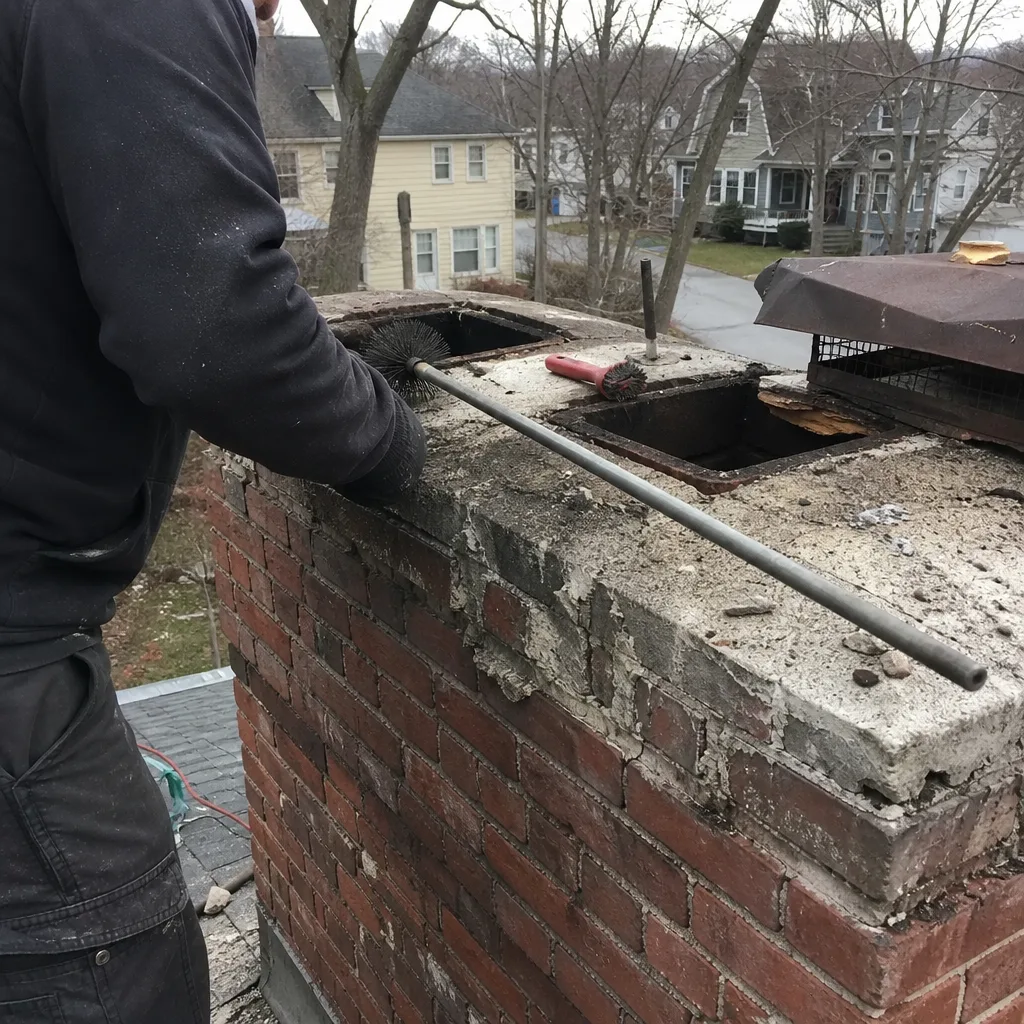 Before
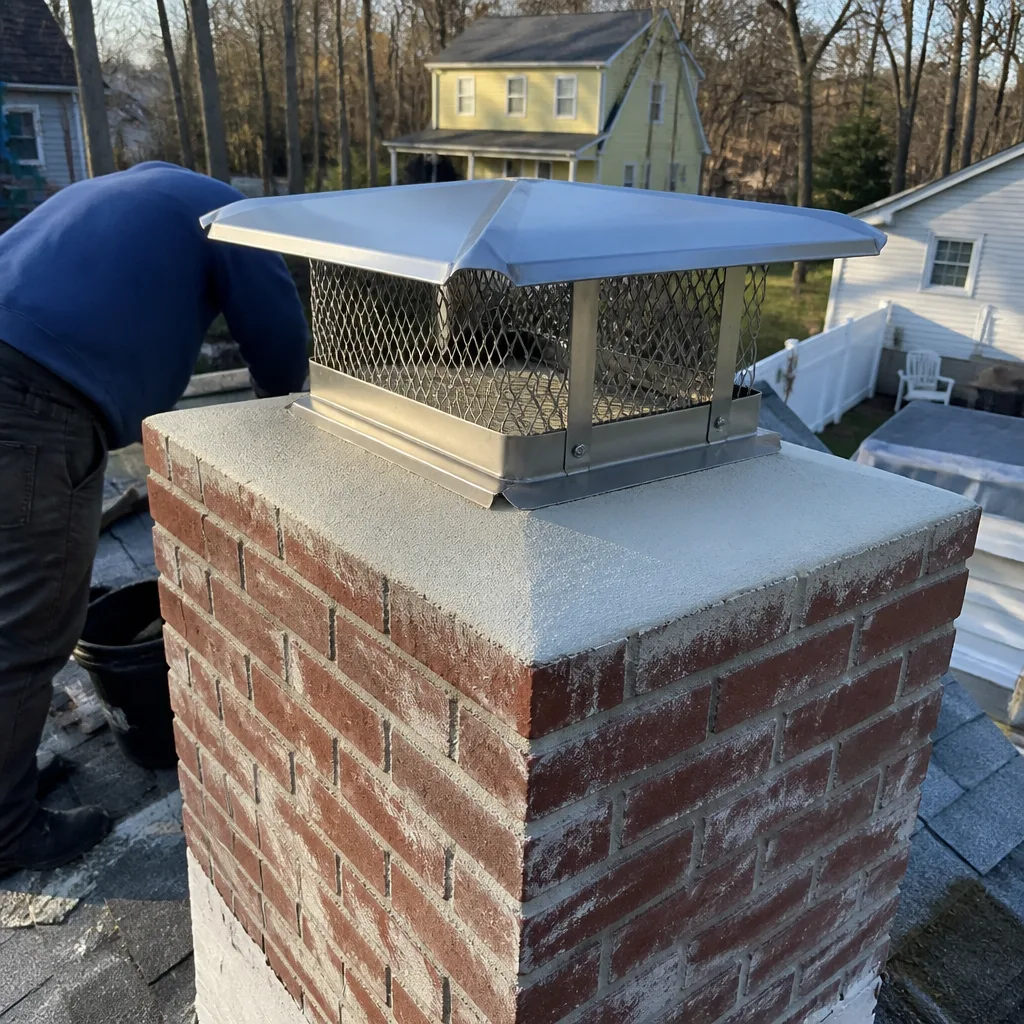 After
After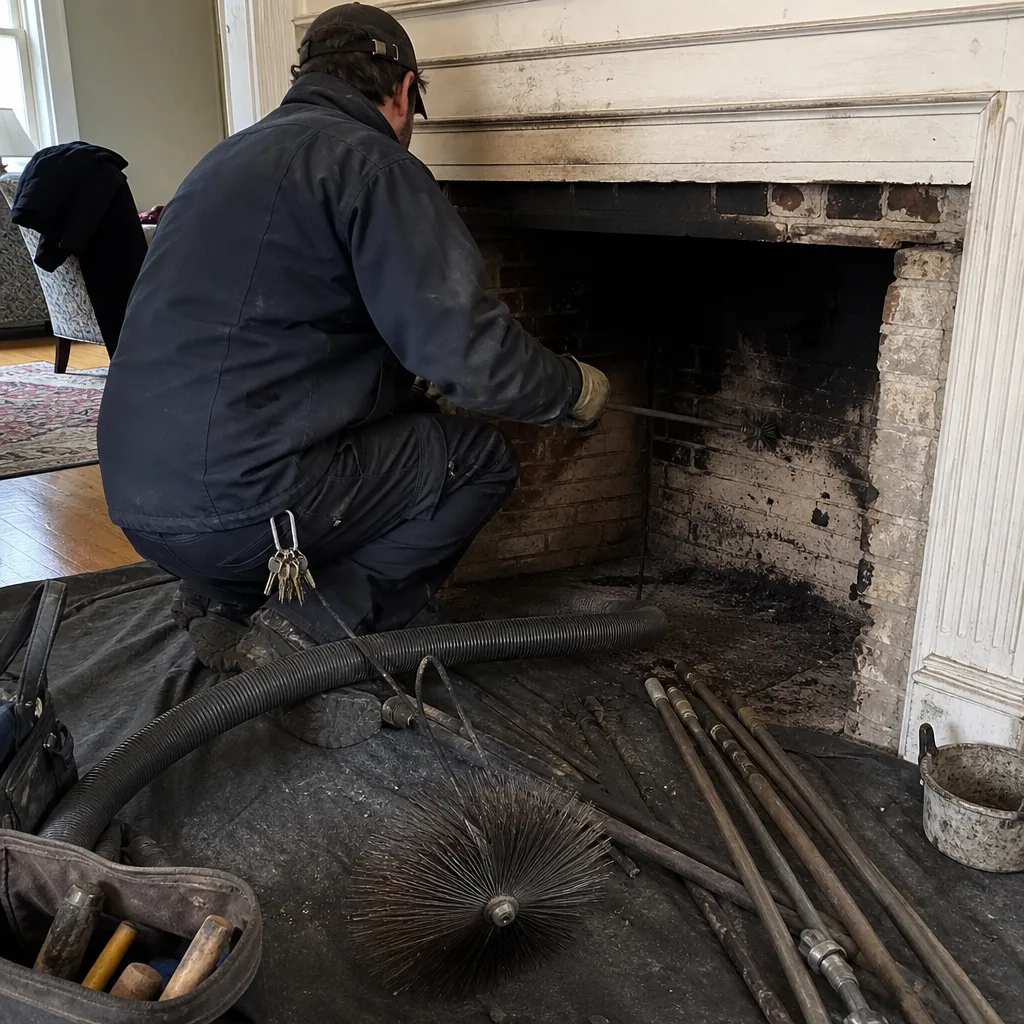 Before
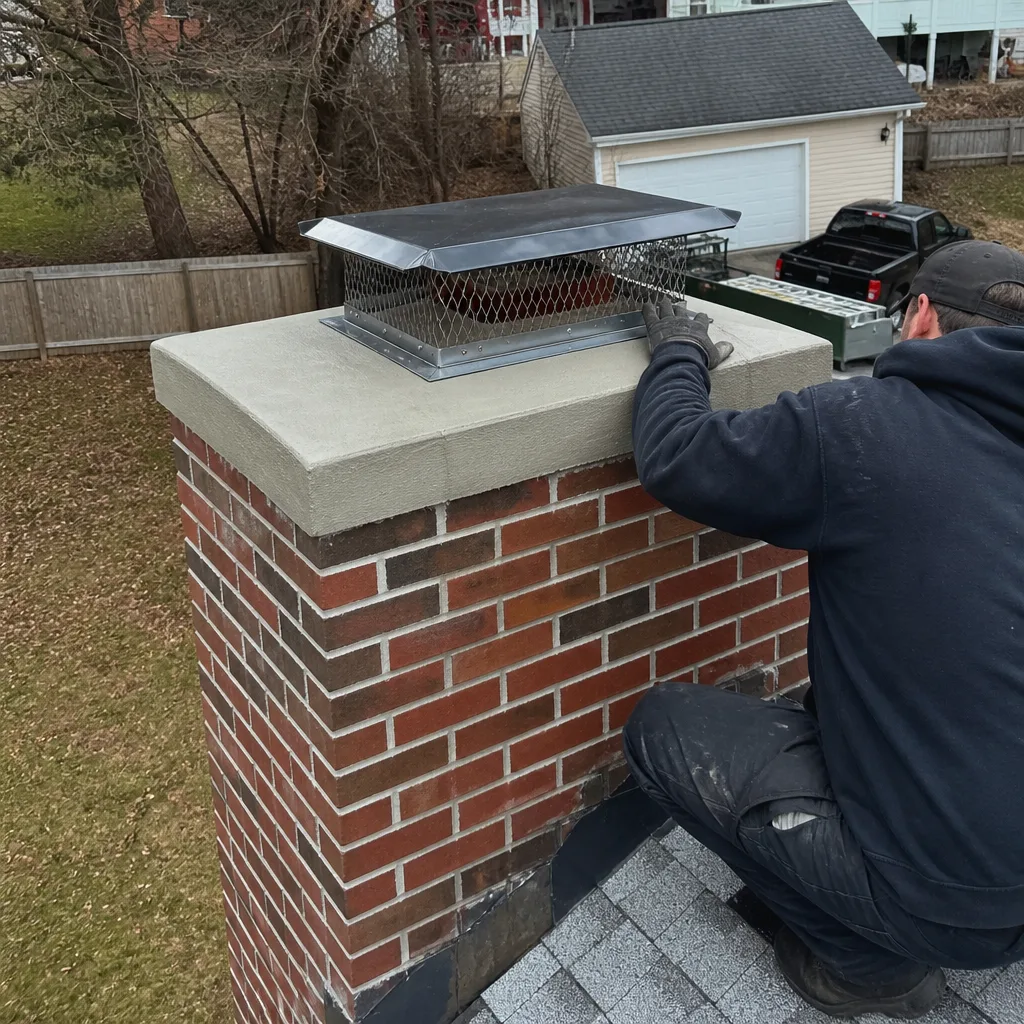 After
AfterCreosote Removal in Boston, MA
Creosote removal in Boston typically runs between $150 and $800 depending on how severe the buildup is, and most Chimney Cleaning & Sweep services are finished in a single visit by one of our uniformed technicians. If your chimney has a heavy third-degree deposit, expect the work to take longer and cost more – but you’ll leave the job knowing it’s documented with photos and backed by our 90-Day Done Right Promise in writing. Call (857) 597-5950 to schedule a free estimate; a live person answers every hour of every day.
Hearthstone Chimney Co. has been removing creosote from Boston-area chimneys since 1984. Over 42 years, we’ve worked through every variation this city’s climate can produce: the wet hardwoods that Boston homeowners burned through the oil crisis era, the decades of coal-to-gas conversions in Dorchester triple-deckers, the Victorian-era flue proportions in Jamaica Plain that were never quite right for modern inserts. Creosote doesn’t scare us. But it should get your attention – because at third degree, it burns hot enough to melt clay tile and collapse a liner. We take it seriously, and we’d rather explain that plainly than sell it to you with alarm.
This page covers everything you need to know about professional creosote removal in Boston: what triggers it, how we remove it, what it costs, and what separates a real job from a quick brush-and-bill. If you want the broader picture of annual maintenance, our Chimney Cleaning & Sweep in Boston page covers it fully. For a quick question, call us – the person who picks up knows chimneys, not just a script.
What Creosote Is and Why Boston Homes See So Much of It
Creosote is the byproduct of incomplete combustion. When wood smoke rises through a flue that’s cooler than about 250 degrees Fahrenheit, the gases condense on the liner walls and leave behind a residue that builds in layers. First-degree creosote looks like dry, flaky soot – easy to brush out. Second-degree is a tar-like crust that needs more aggressive tools. Third-degree is a glazed, hardened deposit that standard brushing won’t touch; it requires chemical treatment and, in serious cases, mechanical removal.
Boston’s winters make this worse. The city averages around 43 inches of snow per year and prolonged cold stretches that push homeowners to burn fires hotter and longer than they should. But the real driver we see in neighborhoods like West Roxbury, Hyde Park, and Roslindale is unseasoned wood. Burn green oak in a cold flue and you’ll have second-degree buildup in a single season. We see it constantly in older homes where the fireplace was inherited along with the house, and nobody told the new owner that the chimney needed a Level 1 Inspection before the first fire.
Older Boston flue dimensions compound the problem. Pre-1940 construction in areas like South End brownstones and East Boston triple-deckers often features oversized flues relative to the insert or stove being used today. A flue that’s too large for the appliance produces slow, cool draft – exactly the condition that accelerates creosote formation. This isn’t a moral failing; it’s physics. But it does mean your chimney needs attention more frequently than the national average suggests.
When You Need Creosote Removal
- You can see black, shiny buildup inside the firebox or at the damper: Glazed creosote at the throat is a reliable sign that deposit has progressed past first degree. At that point, a standard annual sweep won’t be enough.
- You smell something like tar or asphalt when the fireplace is cold: That odor, especially on humid summer days, is third-degree creosote off-gassing through the flue. Boston’s August humidity pulls it out in force – homeowners in Beacon Hill and Back Bay often notice it first in July before they’ve lit a single fire.
- Your fires are sluggish and difficult to start: Heavy buildup reduces the effective diameter of your flue and chokes draft. If a fire that used to draw well now smokes back into the room, creosote restriction is a common cause.
- A chimney sweep told you that you have third-degree deposits: If someone gave you that verdict without photos to back it up, call us for a free second opinion. We document every inspection with a Level-2 camera so you can see exactly what we’re talking about – no guessing, no upselling on faith alone.
- You’ve had a chimney fire, even a small one: Many chimney fires in Boston homes go unnoticed – a brief roar, some heat, and then it’s out. But any fire burns and cracks liner, and whatever creosote remains afterward is now sitting against a compromised flue. That combination needs professional evaluation before the next fire is lit.
- You haven’t had the chimney cleaned in more than two years and burn wood regularly: The National Fire Protection Association recommends annual inspection for any chimney in use. In Boston’s climate, with the heating loads typical from November through March, two seasons of deferred maintenance is enough to move from minor buildup to a real problem.
Our Creosote Removal Process
Every job starts with an honest Level 2 Inspection of what’s there. We don’t quote a price until we know which degree of creosote we’re dealing with, because the treatment is different and the time required is different. Here’s how a typical removal job goes from the moment our technician arrives.
- Level-2 camera inspection before anything is touched. Our technician lowers a camera through the flue from the top and documents the liner, the deposit thickness, and the degree of creosote in photos you can see on site. You get a plain-English verdict: here’s what’s there, here’s what it will take, here’s the price. No mysteries, no “trust me” – just documentation.
- Protect the living space. We lay drop cloths from the front door to the firebox, seal the firebox opening, and set up a negative-pressure HEPA vacuum at the cleanout. Boston homes – particularly row houses and brownstones with small footprints – don’t have room for a mess, and we don’t leave one.
- First- and second-degree removal by rotary brush. For flaky soot and crusted tar-like buildup, we use professional-grade rotary systems with brushes sized to your exact flue dimensions. This is where cheap contractors cut corners – a brush that doesn’t fit the flue leaves deposits in the corners and along mortar joints.
- Chemical treatment for third-degree glazed creosote. Glazed third-degree deposits don’t brush off. We apply a professional chemical agent – a dry spray or coating depending on the flue – that reacts with the glaze and converts it to a more friable form that can be removed mechanically. This step is not optional if the deposit has reached stage three; no amount of brushing will substitute. We use products appropriate to the liner type, whether clay tile, stainless steel, or cast-in-place.
- Post-removal inspection and liner assessment. After removal, the camera goes back in. Any cracks, spalling, or mortar joint deterioration that was hidden under the creosote gets noted with photos. If the liner is sound, you’ll know it and have photos that prove it. If it needs repair – a HeatShield resurfacing or a new liner – we explain what’s needed and why, and give you a written quote before we leave.
- Final cleanup and written documentation. Everything gets vacuumed, the drop cloths come up, and you receive a written summary of what was found, what was done, and what – if anything – needs follow-up. The 90-Day Done Right Promise covers this job: if anything we touched isn’t right within 90 days, we come back. In writing, no arguing.
Creosote Removal Pricing in Boston
Creosote removal in Boston costs more than a standard sweep, and it should – the chemistry, the equipment, and the time are different. Here are honest ranges based on what we actually charge in this market.
| Creosote Degree | Typical Cost Range | Notes |
|---|---|---|
| First-degree (flaky, dry soot) | $150 – $250 | Included in most standard chimney sweeps |
| Second-degree (tar-like crust) | $250 – $450 | Rotary brush systems; takes longer than a standard sweep |
| Third-degree (glazed deposit) | $450 – $800+ | Requires chemical treatment; may need a return visit |
| Level-2 camera inspection | Included | Before and after, with photos – always included |
A few things affect where your job lands in those ranges. Flue height matters – Boston’s older three-story colonials and four-story Victorians in Dorchester and Milton Hill have long flue runs that take more time. Flue shape matters too: rectangular clay tile flues common in pre-1950 construction accumulate creosote differently than round stainless steel, and the brush setup is different. Access matters: a chimney with no cleanout door takes longer to fully clear than one with proper bottom access.
If your job is a repair over $250, our standing $50 Off Any Repair Over $250 offer applies. We also offer a permanent 5% Senior and Veteran discount – no paperwork, just tell us when you call. And if you’ve already gotten a written estimate from another company, our Free Second Opinion is there so you can compare apples to apples before you decide.
The number on the estimate is the number on the invoice. That’s how we’ve operated since 1984 and we’re not going to change it.
Call (857) 597-5950 to schedule your free estimate. We’ll tell you exactly what we see and exactly what it will cost before any work begins.
What Makes Third-Degree Creosote Dangerous – and Why DIY Removal Isn’t the Answer
We get this question from homeowners who’ve found products at the hardware store and want to know if they can handle it themselves. The honest answer: first-degree creosote, the dry flaky kind, is manageable with the right brush if you’re comfortable on a roof and willing to work carefully. Second-degree starts getting difficult. Third-degree is a different situation entirely.
Glazed creosote is highly combustible – it burns at temperatures that can exceed 2,000 degrees Fahrenheit, hot enough to crack clay tile and warp stainless steel. The chemical treatments that convert it to a removable form are effective, but they need to be matched to your liner material, applied at the right rate, and allowed to work the right amount of time before mechanical removal. Applied incorrectly, they can leave a deposit that looks addressed but isn’t. And working inside a sooty flue with combustible material in an enclosed space is genuinely hazardous work that calls for the right equipment and training. We’re not saying this to protect our business model. We’re saying it because we’ve been in chimneys for over 42 years and we know what goes wrong when this work is rushed.
If you have second- or third-degree buildup, call a professional. The cost of the job is substantially less than the cost of a chimney fire and the damage that follows.
Boston’s Neighborhoods and Creosote: What We See Street by Street
Because we’ve worked in Boston continuously since 1984, we see patterns by neighborhood that a newer company simply wouldn’t know. In Cambridge and Somerville, many of the older multi-family conversions have shared flue systems that were split incorrectly decades ago – the resulting flue restriction accelerates creosote in every unit. In West Roxbury and Dedham, homeowners with wooded lots tend to burn whatever comes off the property, and green wood is the fastest route to second-degree buildup we know. In the South End and Back Bay, the issue is usually decades of deferred maintenance on ornamental fireplaces that were used only occasionally – thin but hardened deposits that look minor and aren’t.
In Charlestown and East Boston, the combination of older brick liners and the shift to high-efficiency inserts has left a lot of flues operating with the wrong cross-section for the appliance. The draft is marginal, the temperatures are low, and the creosote builds fast. This is a structural mismatch, not a usage problem, and the fix is usually a liner right-sized to the appliance – not just a cleaning.
None of this is meant to alarm you. It’s just useful to know that where you live in Boston affects what your chimney needs. We can look at your specific flue and tell you plainly what’s there and what it will take.
FAQs – Creosote Removal
How much does creosote removal cost in Boston?
Creosote removal in Boston typically costs between $150 and $800, depending on the degree of buildup. First-degree deposits are usually addressed as part of a standard Fireplace Cleaning in the $150-$250 range. Second-degree crusted buildup runs $250-$450. Third-degree glazed creosote, which requires chemical treatment, typically falls in the $450-$800 range and may need a follow-up visit. The estimate is free, and the price we quote is the price on the invoice. Call (857) 597-5950 and we’ll give you an exact number after we’ve looked at what’s there.
Can you remove third-degree creosote in one visit?
Third-degree creosote removal often takes two visits. The first applies a chemical treatment that converts the glazed deposit into a form that can be mechanically removed; the second does the removal once the treatment has had time to work – usually a week or two later. Some jobs, where the deposit is thick but not fully glazed, can be resolved in a single visit, but we won’t promise that until we’ve seen the flue on camera. Most of our jobs are completed in a single visit; when this one requires two, we’ll tell you upfront and explain why.
Is creosote removal the same as a chimney sweep?
A standard chimney sweep handles first-degree creosote – the dry, brushable soot that accumulates in a regularly used fireplace. Creosote removal is a separate, more involved process when the deposit has progressed to second or third degree. It requires different tools, chemical agents in some cases, and takes longer. If you’re not sure which you need, our Level-2 camera inspection will show you exactly what’s present before we quote anything. You can read more about the full range of maintenance services on our home page.
How do I know if I have creosote buildup in my Boston home?
The most reliable sign is a tar or asphalt smell from the fireplace, especially on warm humid days – Boston summers draw the odor out noticeably. Visible black shiny deposits at the damper or inside the firebox are another indicator. Sluggish fires that smoke back into the room, or a fireplace that used to draw well and now doesn’t, often point to flue restriction from buildup. If you’ve burned wood through two or more winters without an inspection, you almost certainly have some degree of creosote worth looking at. Call us and we’ll put a camera in the flue so you know for certain.
Ready to Schedule Creosote Removal in Boston?
Russell Haines and the Hearthstone team have been removing creosote from Boston chimneys since 1984. Every job starts with a camera inspection and a plain-English verdict, ends with photos you can keep, and is backed by the 90-Day Done Right Promise in writing. Our technicians are background-checked, uniformed, and carry professional-grade materials from brands like Gelco and Olympia Chimney – not builder-grade substitutes. The price we quote is the price you pay.
Call (857) 597-5950 to schedule your free estimate. A live person answers every call, at any hour. We’ll tell you what’s there, what it costs, and what we’ll do about it – plainly, without pressure, the same way we’ve done it for over four decades.
Written by Russell Haines, Owner at Hearthstone Chimney Co., serving Boston since 1984.